Can Am Workplace Training Corporation
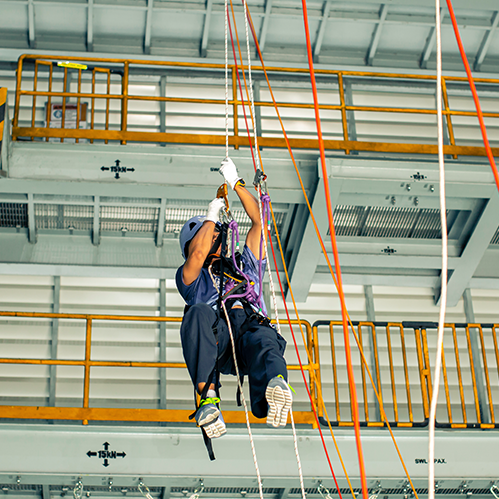
Many employers use the terms “working at heights training” and “fall protection training” interchangeably. In practice, these two types of workplace health and safety training can involve different requirements and course content. Choosing the right one isn’t a guessing game—it depends on the type of work your employees perform, the hazards present at the worksite, and the applicable Ontario requirements for their role.
Understanding the distinction between working at heights vs. fall protection training matters more than most employers realize. Registering a team for the wrong course can leave gaps in compliance and, more importantly, gaps in safety. Below, we break down the key differences, help you determine which training your employees actually need, and outline what to check before you register anyone for a course.
Working at Heights Training vs. Fall Protection Training: Key Differences
Employers shouldn’t assume that a general fall protection course automatically satisfies Ontario’s Working at Heights training requirements. While the two overlap in subject matter, they’re built for different purposes and different regulatory contexts. The table below summarizes the core distinctions.
| Comparison | Working at Heights Training | Fall Protection Training |
| Main purpose | Training for working at heights in covered Ontario construction settings | Training on fall hazards, protective systems, and safe equipment use |
| Who may need it? | Workers and supervisors who meet Ontario’s requirements for designated construction work | Workers exposed to fall hazards, depending on their tasks and applicable requirements |
| Typical content | Working at heights hazards, rights and responsibilities, ladders, scaffolds, fall prevention and fall protection systems | Hazard assessment, fall restraint and fall arrest, harnesses, anchor points, equipment inspection and safe practices |
| Practical training | Includes required hands-on components under the applicable approved program | Depends on the course and workplace needs; practical exercises are important where equipment use is involved |
| Regulatory considerations | Ontario-approved training requirements apply to covered work | Requirements depend on the work activity, workplace, and applicable regulations |
How to Decide Which Training Your Employees Need
The right choice comes down to the nature of the work and what Ontario’s rules require for that specific role.
- Choose a working at heights course when employees must meet Ontario’s specific training requirements for covered construction projects.
- Choose fall protection training in Ottawa alongside this when employees need instruction suited to their particular fall hazards, job tasks, and protective equipment.
- Consider both, or additional training, when employees need approved working at heights training as well as instruction on workplace-specific equipment, procedures, or hazards.
Before registering anyone, assess job roles, work locations, equipment in use, and existing training records. A worker on a residential roofing crew has different needs than one operating a boom lift on a commercial site, even though both face fall hazards.
What to Check Before Registering Employees
Before you book a course, run through this checklist:
- Confirm whether the course meets applicable Ontario requirements for the work being performed.
- For mandatory working at heights training, verify that both the provider and the program are approved by Ontario’s Chief Prevention Officer (CPO).
- Check whether the course includes the required theory and practical components, not just classroom instruction.
- Confirm whether employees need additional equipment-specific or workplace-specific instruction beyond the standard curriculum.
- Check certificate validity and refresher requirements. Ontario working at heights training is generally valid for three years, so track expiry dates to avoid lapses in compliance.
Skipping any of these steps can leave your business exposed, whether that’s a compliance gap during an audit or, worse, a worker who isn’t properly prepared for the hazards they’ll face on site.
Working at Heights and Fall Protection Training Courses at CAWTC
Can Am Workplace Training Corporation (CAWTC) offers both working at heights training Ottawa businesses rely on and dedicated fall arrest training in Ottawa, giving employers the flexibility to match training to their actual workplace needs. Whether your team needs CPO-approved working at heights certification, a more targeted fall protection course, or a combination of both, our training options are built to address specific job roles, site hazards, and regulatory requirements.
Every workplace is different, and the right course depends on the details—equipment used, site conditions, and the tasks your employees perform day to day. That’s why we encourage employers to talk through their specific requirements with our team before registering staff for any program.
Not sure which course fits your crew? Get in touch with CAWTC through our course matching assessment, and we’ll help you identify the training that keeps your team compliant, confident, and safe at heights.